
Terahertz Band Could Strengthen High-Altitude Communications Networks
About
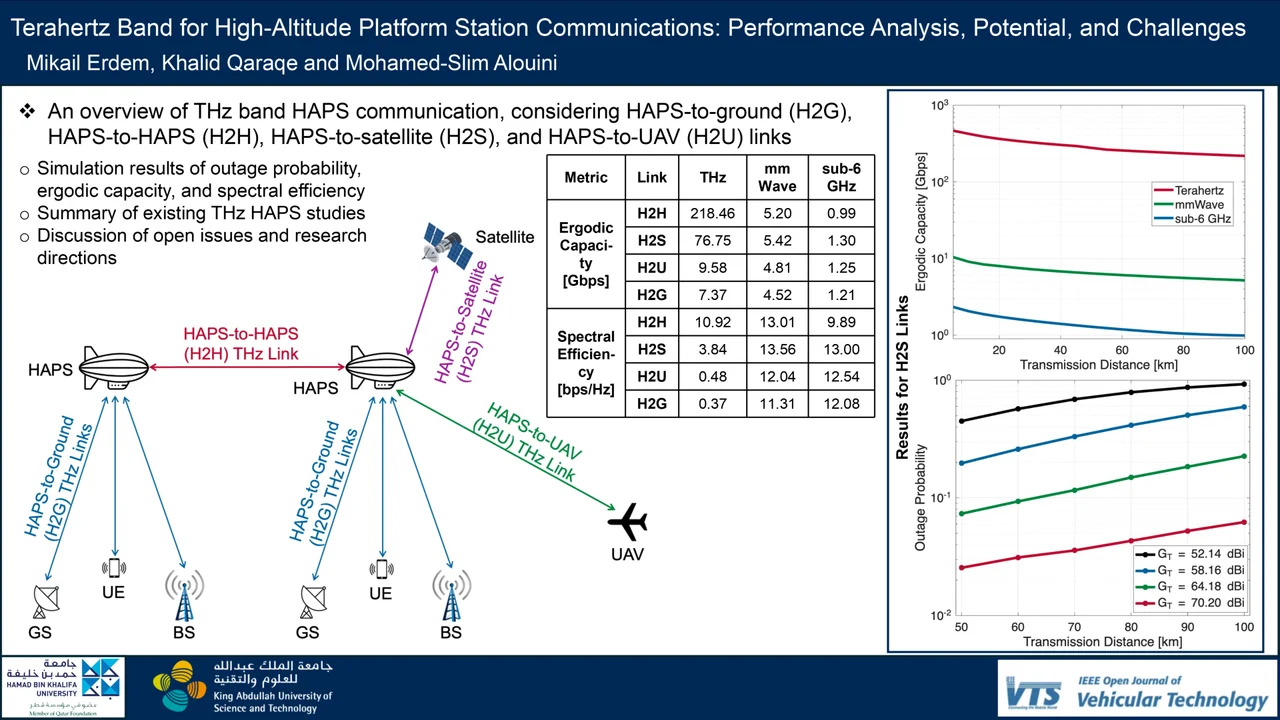
Researchers from Hamad Bin Khalifa University and KAUST have presented a comprehensive analysis of how terahertz (THz) communications could support high-altitude platform stations (HAPSs), offering guidance for next-generation non-terrestrial networks. Their study examines where THz links are most effective, where they remain challenging, and which research problems must be solved before deployment.
HAPSs operate in the stratosphere and can complement terrestrial infrastructure by extending connectivity to remote regions, disaster areas, and temporary events. Since they locate above the atmosphere, they experience less molecular absorption than ground links while remaining nearly stationary, making them attractive candidates for THz communications.
The team, including Mikail Erdem, Khalid A. Qaraqe, and Mohamed-Slim Alouini, evaluated four communication scenarios: HAPS-to-HAPS, HAPS-to-satellite, HAPS-to-ground, and HAPS-to-uncrewed aerial vehicle (UAV) links. Rather than focusing on a single application, the work combines a literature review with channel modelling and simulations to provide a broad assessment of the technology.
“Our goal was to clarify where terahertz communication can provide the greatest benefit for HAPS networks while also identifying the technical challenges that must be addressed for practical deployment,” said Prof. Mohamed-Slim Alouini.
The researchers modeled free-space path loss, atmospheric absorption, beam misalignment, turbulence and noise; then, compared THz performance against millimeter-wave and sub-6 GHz systems in terms of outage probability, ergodic capacity and spectral efficiency. The results indicate that HAPS-to-HAPS and HAPS-to-satellite links benefit most from the large bandwidth available in the THz spectrum, achieving substantially higher communication capacity since high-altitude operation reduces atmospheric absorption while the quasi-stationary nature of HAPS avoids beam misalignment. In contrast, HAPS-to-ground and HAPS-to-UAV links remain much more difficult because of severe losses introduced by atmospheric effects and turbulence.
The paper also surveys existing THz HAPS literature and identifies future research priorities, including channel estimation, beam management, resource allocation, experimental measurements, integrated sensing and communication, multiple-access techniques and medium access control protocols.
More information can be found in the paper:
Related People
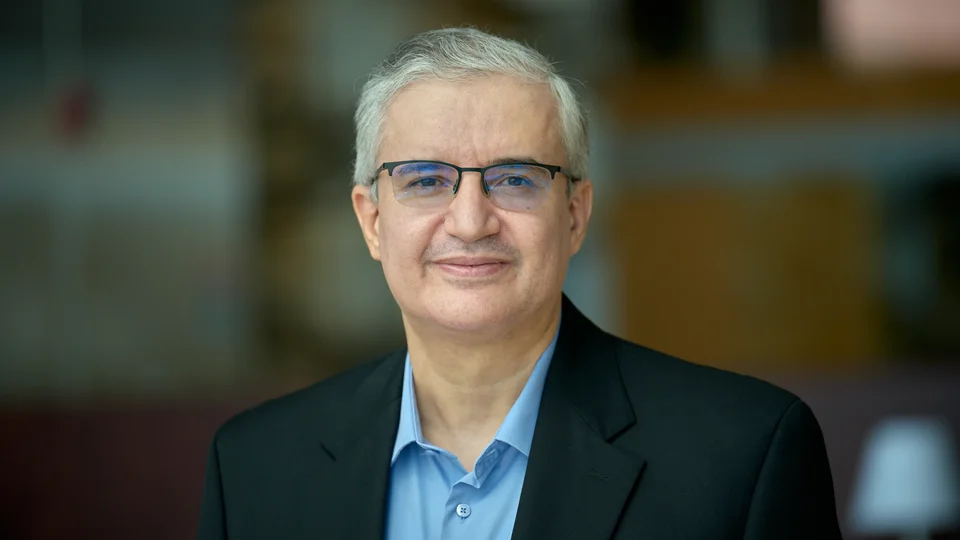
Mohamed-Slim Alouini
- Al-Khawarzmi Distinguished Professor, Electrical and Computer Engineering